
Anglesey has been inhabited for thousands of years, and the evidence is everywhere – from prehistoric stone circles to medieval churches, Roman watchtowers to Victorian industrial sites. Here are our favourite heritage sites on the island, all within easy reach of Trearddur Bay.
Bryn Celli Ddu Burial Chamber
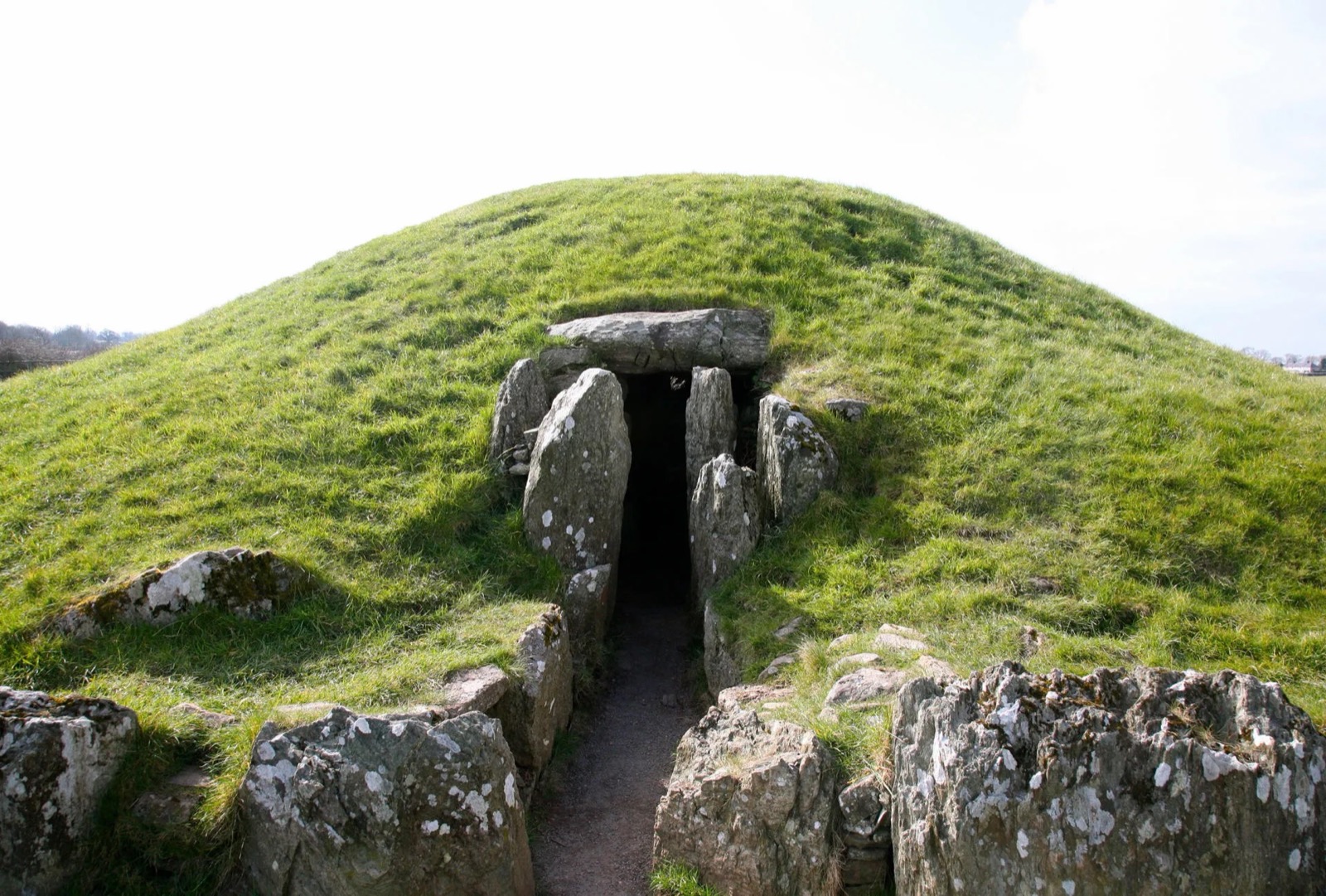
One of Anglesey’s most famous prehistoric landmarks. The ‘Mound in the Dark Grove’ is actually two sites in one – an early Neolithic henge was later replaced by a chambered tomb beneath a mound measuring up to 85 feet in diameter. Inside, a narrow passage leads to an octagonal chamber where artefacts including human bones, arrowheads and carved stones have been found. The most remarkable feature can only be seen once a year: as the sun rises on the summer solstice, shafts of light shine directly down the passageway to illuminate the chamber within. Managed by Cadw, free entry.
Holyhead Maritime Museum
Situated at picturesque Newry Beach, this fascinating museum is housed in the oldest lifeboat station in Wales. Take a step back in time and learn about shipwrecks, gallant rescues and pirates. There is also a restored World War II air raid shelter in the grounds. A wonderful family experience and just a few minutes from Trearddur Bay.
Llanbadrig Church
Said to have been founded by Saint Patrick in 440 AD, Llanbadrig is reputedly the oldest church in Wales. It sits on a windswept headland overlooking the small islet where St Patrick is said to have been shipwrecked. A beautiful and atmospheric spot on the north coast of the island.
South Stack Lighthouse
Built in 1809, South Stack Lighthouse stands on a tiny island off the western tip of Holy Island. The descent down 400 steps to the lighthouse is an experience in itself, with cliffs towering above and seabirds wheeling overhead. The visitor centre tells the story of the keepers who lived and worked here. Spectacular at any time of year but particularly dramatic in a storm.
Beaumaris Gaol
This Victorian prison provides a fascinating and sometimes chilling insight into the world of the prisoner during the 1800s. Walk along dimly lit corridors, explore spartan cells and places of punishment, and visit the condemned cell. According to local tradition, the last man executed here – Richard Rowlands in 1862 – put a curse on the church clock opposite the scaffold. To this day, the clock has never kept the right time.
Parys Mountain
One of Anglesey’s most extraordinary landscapes. The ancient copper mine at Parys Mountain features a spectacular Great Opencast, shaped by miners using nothing more than picks, shovels and gunpowder. The colours are astonishing – reds, oranges, pinks, purples, blacks, greens, yellows and greys create an artist’s palette across the scarred terrain. A network of walks surrounds the site, with a viewing area offering a stunning panorama.
Plas Newydd House and Gardens
A National Trust property on the banks of the Menai Strait near Llanfairpwllgwyngyll. The current building has its origins in 1470 and evolved over centuries to become one of Anglesey’s principal residences. The house contains Rex Whistler’s largest painting, and the grounds offer beautiful walks with views across to Snowdonia.
Plas Cadnant Hidden Gardens
These secret gardens were hidden for more than 70 years before being restored to their former splendour. Stroll around the beautiful walled garden, wander through a wooded dell full of fabulous plants and flowering shrubs, and pause beside a bewitching stream of natural pools and waterfalls. The gardens are bordered by a Site of Special Scientific Interest, home to red squirrels, rare ferns and mosses. Every step in this 10-acre paradise is a moment to treasure.
Oriel Môn
A museum and arts centre in Llangefni. The History Gallery provides insight into the island’s culture, history and environment, while the Art Gallery has a changing programme of exhibitions encompassing art, craft, drama, sculpture and social history. Well worth a visit on a rainy day.
GeoMôn Geopark Centre
Located in Amlwch, GeoMôn was established to promote Anglesey as an international UNESCO Geopark. The visitor centre features displays relating to the island’s changing geology and climate throughout geological time. The building itself was originally constructed as a shelter for pilots waiting to guide sailing ships in and out of the historic port of Amlwch.
Anglesey’s history stretches back thousands of years, and there is always something new to discover. Browse our holiday properties and plan your heritage trail from the comfort of a beautiful coastal home.